

You have irregular periods, and you have been told it is “just your hormones.” Or you were diagnosed with PCOS and then someone, maybe even a well-meaning relative, told you, “You may never have a baby.”
Let’s start with the truth: having PCOS does not mean you cannot get pregnant. Many women with PCOS conceive, some on their own and many with a little medical help. What matters is understanding your body and getting the right support early.
Want answers about your own cycle? Book a private consultation with our fertility team, or call (+234) 707 575 2354.
What is PCOS, in simple words?
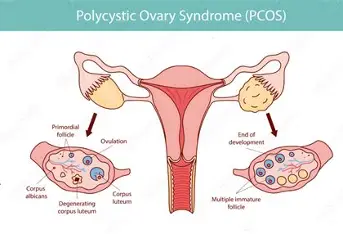
PCOS stands for polycystic ovary syndrome. It is a hormonal condition that affects roughly 1 in 10 women of childbearing age. In PCOS, the ovaries may not release an egg every month, or may not release one at all. Without ovulation, pregnancy is difficult.
The name is a little misleading. You do not need “cysts” to have PCOS, and having small follicles on a scan does not automatically mean you have it. Doctors usually diagnose it when you have at least two of these three things:
- irregular or missing periods (ovulation problems)
- higher levels of “male” hormones (androgens), shown by blood tests or by signs like acne and extra hair
- ovaries that look polycystic on ultrasound
Signs you might have PCOS
Not every woman has all of these, and they can look different from person to person:
- periods that come late, rarely or not at all
- very long cycles, such as every 40 to 90 days
- stubborn acne that doesn’t respond to usual treatment
- extra hair on the face, chin, chest or stomach
- thinning hair on the scalp
- weight gain, especially around the waist, or difficulty losing weight
- dark, velvety patches on the neck, armpits or groin
- difficulty getting pregnant
If you recognise several of these, please don’t self-diagnose or self-medicate. A proper check can tell you where you stand. A pelvic ultrasound and hormone tests are usually where we start.
Why does PCOS make it harder to conceive?
To get pregnant, your body needs to release an egg at the right time of the month. In PCOS, hormone imbalances, often linked to insulin resistance, can stop eggs from maturing and releasing properly. So the main problem is usually irregular or absent ovulation, not that you have no eggs.
This is encouraging news, because ovulation problems are among the most treatable causes of infertility.
Common myths about PCOS (let’s clear them up)
“PCOS means I can never have a baby.”
Not true. With the right care, many women with PCOS get pregnant.
“Only overweight women get PCOS.”
Not true. Women of all sizes can have PCOS, including slim women.
“If I have regular periods, I can’t have PCOS.”
It is less likely, but some women with PCOS still have fairly regular cycles. That is why proper testing matters.
“A herbal mixture or a drug from the chemist will fix it.”
Please be careful. Some products can do more harm than good, or delay real treatment. Fertility medications should only be taken under a doctor’s guidance.
What can help you get pregnant with PCOS?
The right treatment depends on you, your age, your weight, your tests and how long you have been trying. Here are the main options, usually tried in steps.
1. Lifestyle changes.
If you are carrying extra weight, even losing 5 to 10 percent of your body weight can help restore regular ovulation in some women. Balanced meals, regular movement, good sleep and managing stress all support your hormones. This does not mean crash diets. Slow, steady and realistic changes work best.
2. Ovulation-boosting medication.
Your doctor may prescribe medication to help your ovaries release eggs, with scans to monitor your response. This is one of the most common first treatments, and many women conceive at this stage.
3. Treating insulin resistance.
If your tests show insulin resistance, your doctor may recommend treatment that supports your body’s response to insulin, alongside lifestyle changes.
4. IUI (intrauterine insemination).
When medication alone has not worked, prepared sperm can be placed directly in the womb around ovulation, which gives pregnancy a better chance.
5. IVF.
If other treatments have not worked, or there are other factors like blocked tubes or male factor infertility, IVF may be recommended. Women with PCOS often respond well to IVF, but they need careful monitoring because their ovaries can react strongly to stimulation medication. That is one reason to choose a clinic with an experienced team.
6. Surgery in selected cases.
A minor procedure to the ovaries is sometimes considered for women who don’t respond to medication. Your specialist will tell you if this applies to you.
Not sure which option is right for you? You don’t have to guess. Speak to our fertility specialists and get a plan made for your body.
Don’t forget the other half of the story
PCOS is only one possible factor. Your tubes, your womb and your partner’s sperm also matter. Starting with a full check saves you months of trial and error. A semen analysis for your partner and, where needed, an HSG to check your tubes are often part of the picture. Read more about male infertility and the thyroid test many people overlook.
When should you see a specialist?
Please book a consultation if:
- you have PCOS and have been trying for 6 to 12 months without success
- you are 35 or older and have been trying for 6 months
- your periods are very irregular or have stopped
- you have been told you have PCOS and no one has explained your options
- you have had treatment before that did not work
Taking care of yourself while you wait
PCOS can be emotionally heavy. The waiting, the comparisons and the questions from relatives can leave you feeling alone. Be gentle with yourself. Talk to your partner, find someone you trust, and remember that PCOS is a medical condition, not a reflection of your worth as a woman.
Questions women often ask about PCOS
Can I get pregnant naturally with PCOS?
Yes, some women do, especially with lifestyle changes. Others need medication or fertility treatment. It depends on your situation.
Does PCOS go away after pregnancy?
No. PCOS is a long-term condition that can be managed, but a pregnancy does not cure it.
Is PCOS dangerous in pregnancy?
Women with PCOS may have a higher chance of some pregnancy complications, such as gestational diabetes and high blood pressure, so good antenatal care is important.
Will I need IVF?
Not necessarily. Many women with PCOS conceive with medication or IUI. IVF is usually considered when other options haven’t worked or other factors are involved.
How long does it take to get pregnant with PCOS?
It varies. Some women conceive within a few months of treatment, others take longer. A personalised plan gives you the best chance.
Will treatment be expensive?
Cost depends on your diagnosis and what you need. We give you a personalised estimate after your consultation and offer financing options and patient support programs.
You are not broken, and you are not alone
PCOS is common, it is manageable, and it is not the end of your dream of becoming a mother. With the right testing and a plan made for you, many women with PCOS hold their babies.
Need help? Let’s talk.
Book a private consultation at Doren-Gynaecare IVF Fertility Centre. We will listen, test what needs testing and help you understand your options, at your pace.
📞 Call: (+234) 707 575 2354 or 0816 716 3836
📍 Visit us: 8 Omoba S. Akinlolu St, Ibeju, Ajah, Lekki, Lagos