

More and more women are asking this question, and honestly, it’s a good one to be asking. Whether it’s because you’re focused on your career right now, you haven’t found the right partner yet, you’re about to start a medical treatment, or you just want a bit more control over your own timeline — freezing your eggs has become one of those options that genuinely gives you room to breathe.
For a long time, women didn’t really have this choice. Egg freezing existed, but the technology wasn’t reliable enough to trust it with something this important. That’s changed. A faster freezing method called vitrification has made the whole process far more dependable than it was even a decade ago, which is part of why so many more women are considering it today.
Still, it’s a big decision, and it comes with real questions. When is the right time? What actually happens during the process? And realistically, what are the chances this leads to a baby down the line? Let’s go through it properly.
What Egg Freezing Actually Means
In simple terms, your eggs are retrieved from your ovaries, frozen while they’re still unfertilized, and stored until you’re ready to use them — whether that’s in two years or fifteen. When that time comes, the eggs are thawed, fertilized with sperm in a lab, and transferred to the uterus, using the same process as IVF.
The whole point is timing. You’re born with all the eggs you’ll ever have, and both the number and the genetic quality decline as you get older — a decline that tends to speed up in your mid-to-late 30s. Freezing your eggs while you’re younger essentially locks in their quality at that point, even if you don’t actually use them until years down the line.
It’s worth knowing the difference between egg freezing and embryo freezing too. Egg freezing preserves the eggs on their own, which keeps your options open about who you eventually have children with. Embryo freezing means fertilizing the eggs with sperm first — usually the choice for women who already have a partner, or who are using donor sperm.
Who Actually Does This
There isn’t one type of person who freezes their eggs. We see all kinds of reasons, and none of them need justifying to anyone:
Wanting to focus on career, education, or financial stability before starting a family. Not having met the right partner yet, but not wanting time to make that decision for you. Facing a medical diagnosis or treatment — chemotherapy, radiation, certain surgeries — that could affect fertility, where preserving eggs beforehand matters. Managing a condition like endometriosis, PCOS, or a family history of early menopause. Simply wanting the flexibility, with no specific medical reason at all — just proactive planning.
Patients come to us in their late 20s planning well ahead, in their mid-30s wanting to preserve what’s left of their fertility window, and sometimes younger, facing a diagnosis that means acting quickly before treatment starts. There’s no wrong reason to be here.
How the Process Actually Works
Here’s what it generally looks like, from your first appointment to the eggs being safely stored:
First comes a consultation and some baseline testing — usually hormone blood work and an ultrasound — to get a sense of your ovarian reserve and how your body is likely to respond to stimulation.
Then ovarian stimulation begins. For about 10 to 12 days, you’ll take daily hormone injections that encourage your ovaries to develop several mature eggs in that cycle, instead of the usual one.
During this time, you’ll come in regularly for monitoring — ultrasounds and blood tests to track how the follicles are growing, so your specialist can adjust your medication as needed and figure out the right moment for retrieval.
Once everything looks ready, you’ll get a trigger injection, timed precisely to finish maturing the eggs before they’re collected.
Then comes egg retrieval itself — a short, minimally invasive procedure, usually 15 to 20 minutes, done under light sedation. A thin needle guided by ultrasound collects the mature eggs directly from your ovaries.
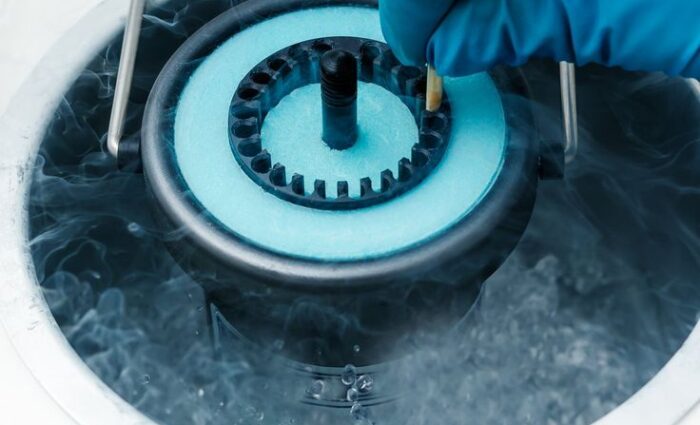
Right after retrieval, the eggs go through vitrification — they’re frozen so rapidly that ice crystals don’t have a chance to form, which protects the delicate structure of the egg.
From there, they’re stored in secure, carefully monitored tanks, where they can stay viable for years.
Most women go through the whole active process — from starting medication to retrieval — in about two weeks, with just a day or two of recovery afterward before getting back to normal life.
Timing And Why There’s No Single Right Age
Egg quality and quantity are generally at their best earlier in life, which is why a lot of specialists suggest thinking about this in your late 20s to mid-30s, when a single cycle tends to produce more, higher-quality eggs. Fertility usually starts declining more noticeably after 35, both in how many eggs remain and the chance of chromosomal issues in the eggs that are left.
But that’s not the whole story for everyone. Some women in their late 30s or early 40s still have a good ovarian reserve and go ahead with freezing, understanding they might need more than one cycle to bank enough eggs. And some women in their 20s turn out to have a lower reserve than expected, and end up freezing earlier than they’d planned.
This is exactly why a proper fertility evaluation matters more than just going by age. Tests like AMH (a hormone blood test) and an antral follicle count via ultrasound give a much clearer, personal picture of where you actually stand — so you and your specialist can make a real decision, not a guess based on a birthday.
Being Honest About the Odds
Egg freezing gives real peace of mind, but it’s not a guarantee, and it’s important to go in with your eyes open. Not every frozen egg survives the thaw. Not every thawed egg fertilizes. Not every resulting embryo leads to a pregnancy. This isn’t a flaw in the process — it’s just how reproduction works, frozen eggs or not.
What affects the odds:
How many eggs get frozen — since not every egg makes it through thawing and fertilization, specialists often recommend banking a good number of eggs, sometimes across more than one cycle, to improve your overall chances later. The age you froze them at — younger eggs generally carry better odds down the line. Your individual health. The quality of the lab and freezing technique — vitrification success does vary between clinics.
An honest consultation, looking at your actual reserve, age, and goals, will give you a far more useful picture than any general statistic floating around online.
The Money and the Emotional Side
Both matter, and neither should be glossed over.
On the financial side, costs usually cover the initial consultation and testing, the medication for stimulation, the retrieval procedure, and then ongoing storage fees for as long as your eggs stay frozen. It’s worth asking your clinic for the full breakdown upfront, along with any financing options, so nothing catches you off guard later.
Emotionally, a lot of women describe this as an empowering decision — taking action instead of just hoping time works out. That said, the daily injections, the appointments, the waiting on results — it can be a lot, even when things go well. Having a care team that checks in on how you’re actually doing, not just your hormone numbers, makes a real difference here.
You Don’t Have to Figure This Out Alone
Deciding whether to freeze your eggs is personal, and it deserves an honest conversation, not a sales pitch. A good fertility team will walk you through your ovarian reserve results plainly, tell you what your realistic odds look like, and help you figure out if — and when — this makes sense for you specifically.
Questions People Ask Us a Lot
How long can frozen eggs actually be stored? With proper freezing and storage, years — some clinics have seen successful pregnancies from eggs frozen over a decade earlier. The real limit tends to be clinic policy or local regulation, not biology.
Does egg freezing hurt? The injections are generally manageable, though some women get mild bloating, soreness at the injection site, or a bit of mood swing. Retrieval is done under sedation, so most women feel little during the procedure itself and are back to normal within a day or two.
How many eggs should I aim to freeze? Depends on your age and fertility profile, but many specialists suggest aiming for around 15 to 20 eggs for a reasonable shot at one live birth later — which can mean more than one cycle, especially past 35.
Will this affect my fertility now, or cause early menopause? No. The eggs collected are ones your body would have lost naturally that cycle anyway. You’re not touching your future reserve beyond that, and it doesn’t bring on early menopause.
If You’re Ready to Talk It Through
Freezing your eggs is really about giving yourself more time and more choice — planning parenthood around your actual life, instead of the other way around. Whether it’s for personal reasons or ahead of a medical treatment, understanding exactly what’s involved is the first real step toward a decision you feel good about.
At Doren-Gynaecare IVF | Fertility Centre in Ajah, Lagos, we offer personalized consultations, ovarian reserve testing, and egg freezing in an environment built around honest conversation, not pressure. You can find out more or book a consultation at https://dorengynaecareivffertility.com/ , or call us on (+234) 7075752354 to speak with our team directly.