
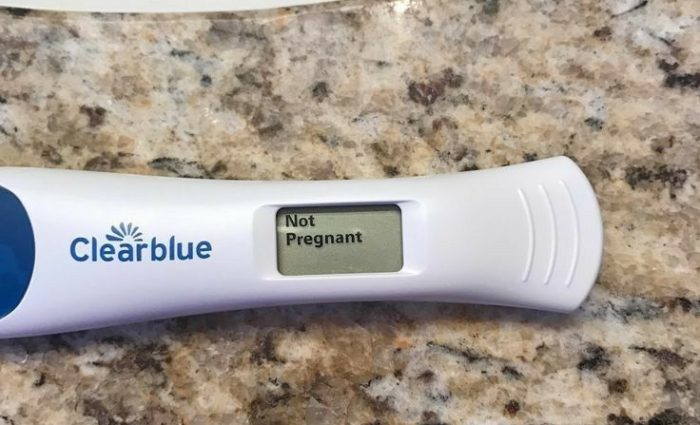

You have been counting days. You know exactly when your period is due, and every month you tell yourself, “This might be the one.” Then it comes, and you smile at the family gathering while someone asks, “So when are we hearing the good news?”
If this sounds like you, first things first: you are not alone, and it is not your fault. Many women across Lagos and the rest of Nigeria are quietly asking the same question: Why can’t I get pregnant?
Let’s talk about it plainly, without blame, without pressure and without the “just relax” advice.
Already worried and want answers now? Book a private consultation with our fertility team. You can also call (+234) 707 575 2354.
First, how long is “too long”?
Many women wait longer than they should because everyone says, “Just be patient.” Patience has its place, but here is a more useful guide:
- Under 35: see a specialist if you have been trying for 12 months.
- 35 and above: see a specialist after 6 months.
- 40 and above, or if you already suspect a problem: don’t wait. Go now.
Even a perfectly healthy couple only has about a 20 to 25 percent chance of conceiving in any single month. So a few months without a positive test does not mean something is wrong. But if you are past the timelines above, it is time to get answers.
8 honest reasons you may not be getting pregnant
1. Your ovulation isn’t happening regularly.
Pregnancy needs an egg, and an egg needs ovulation. If your periods are very irregular, late or sometimes missing, you may not be ovulating every month. Polycystic ovary syndrome (PCOS) is one of the most common reasons. Many women hear “your hormones are just a bit off” for years before anyone tests properly. Not sure about your cycle? A hormone test can show what is going on.
2. Your fallopian tubes may be blocked.
This one is silent. You can feel perfectly fine and still have blocked tubes, often from an old pelvic infection, a past surgery or an untreated STI. If the tubes are blocked, the egg and sperm cannot meet. A simple test called an HSG can check this.
3. Fibroids, polyps or scar tissue.
“Fibroid” is a word many Nigerian women have heard from friends, aunties or their own scan results. Not every fibroid affects fertility, but some do, especially those that change the shape of the womb. A pelvic ultrasound or hysteroscopy will show if yours matter.
4. Endometriosis.
If your period pain is so bad that you have missed work or school, or sex is painful, please don’t just accept it as “normal woman problems.” Endometriosis is real and it can affect fertility, but it can be managed.
Recognise yourself in this list? You don’t have to figure it out alone. Talk to our team and we will help you work out where to start.
5. Your age and egg reserve.
This one is uncomfortable to talk about, but it is better to know. Egg numbers and quality decline over time, especially after 35. This is not a failure on your part. It is biology. Testing your ovarian reserve tells you where you stand so you can plan, and if you want more time, you can also explore egg and embryo freezing.
6. Your thyroid or hormones are off.
Your thyroid is a small gland with a big influence on your cycle. Thyroid and other hormone problems are very common and easy to miss, because they can look like tiredness, weight changes or irregular periods. A simple blood test can pick them up.
7. Everyday habits are adding up.
Smoking, heavy drinking, big changes in weight, constant stress and very little sleep can all affect fertility. This is not about guilt. Most of us are just surviving Lagos traffic, deadlines and pressure. Small changes can help, but they are rarely the whole story.
8. Sometimes there is no clear reason.
Doctors call this “unexplained infertility.” It can be one of the hardest to hear, because you want an answer. But it does not mean there is no hope. Treatments like IUI and IVF often work even when no cause is found.
A quick note: infertility is never only a “woman’s issue.” In nearly half of couples, the man plays a part too. Read our guide on male infertility and consider testing together.
Signs you should not wait any longer
Please book a consultation sooner if you have:
- very irregular, heavy or missing periods
- severe period pain
- a history of pelvic infection, fibroid surgery or other abdominal surgery
- more than one miscarriage
- a partner who has been told he has a sperm problem
If any of these sound familiar, book your consultation here.
“What will they do to me at the clinic?”
Many women delay going because they are afraid of what to expect. Here is what your first visit looks like at Doren-Gynaecare:
- A conversation. We listen to your history and answer your questions, in a private and respectful setting.
- Simple tests. Usually blood tests and a scan. Your partner will have a semen analysis, which is painless. See all our fertility tests.
- A clear plan. You leave with a written treatment plan and a cost estimate.
- Your decision. You choose at every step whether to continue.
Seeing a specialist does not mean you are going straight to IVF. Many couples start with medication or a simple procedure. If you are unsure whether to see a gynaecologist or a fertility specialist, read when to see a gynaecologist vs. a fertility specialist.
Questions women often ask
Can I have regular periods and still struggle to get pregnant?
Yes. Regular periods are encouraging, but blocked tubes, egg quality and other issues can exist alongside them.
Will stress stop me from getting pregnant?
Stress alone rarely causes infertility, so please don’t let anyone tell you it is “all in your head.” Long-term stress can affect your hormones and wellbeing, which is why support matters.
Should my husband or partner be tested too?
Yes, from the start. It saves time, money and heartache.
I have been trying for years. Is it too late?
Not necessarily. Many women conceive after proper testing and treatment, even after long waits. The sooner you get answers, the more options you have.
Will treatment be expensive?
Cost depends on your diagnosis and what you need. We give you a personalised estimate after your consultation, and we offer financing options and patient support programs.
Where can I see a fertility specialist in Lagos?
Doren-Gynaecare IVF Fertility Centre offers testing and treatment under one roof, in Lekki Ajah, Lagos.
You deserve answers, not just advice
You have heard “be patient,” “pray more,” “try this herb” and “just relax.” You deserve more than that. Whatever you believe and however you cope, getting medical answers can go hand in hand with hope and prayer.
Need help? Let’s talk.
Book a private consultation at Doren-Gynaecare IVF Fertility Centre. We will listen, test what needs testing and help you understand your options, at your pace.
📞 Call: (+234) 707 575 2354 or 0816 716 3836
📍 Visit us: 8 Omoba S. Akinlolu St, Ibeju, Ajah, Lekki, Lagos